

2026 Market Trends in Supply Chain Resilience for Fabs
In 2026, supply chain resilience is no longer a defensive topic for semiconductor fabs—it is a direct driver of yield stability, delivery reliability, qualification speed, and long-term competitiveness. For decision-makers evaluating fab strategy, the key question is not whether resilience matters, but where the most material risks now sit and how to prioritize investments across materials, equipment support, packaging, testing, cleanroom control, and supplier governance. The strongest market trend is clear: leading fabs are moving away from single-point optimization and toward multi-layer resilience architectures that combine dual sourcing, deeper technical qualification, local-for-local capacity, digital traceability, and stricter environment control. For organizations operating in or sourcing from the semiconductor ecosystem, 2026 will reward those that can prove continuity, purity, thermal reliability, and data fidelity—not just production capacity.
What are buyers and fab leaders really looking for in 2026?
Search intent around “market trends in supply chain resilience for fabs” is highly practical. Technical evaluators, sourcing teams, quality managers, and executives are typically trying to answer a set of urgent questions:
- Which supply chain risks are most likely to disrupt semiconductor fabrication in 2026?
- How are resilient fabs changing their sourcing, qualification, and inventory models?
- Which parts of the fab supply chain deserve the most attention: chemicals, gases, sensors, packaging, testing, or environment control?
- How should resilience be measured beyond simple supplier diversification?
- What signals indicate that a supplier or fab partner can truly support sovereign-grade or mission-critical manufacturing?
For this audience, generic commentary about “uncertainty” is not enough. They need a framework for judgment. They want to know where resilience translates into operational value: fewer line interruptions, lower contamination risk, more stable thermal performance, better device consistency, faster customer qualification, and lower exposure to geopolitical or logistics shocks.
The biggest 2026 trend: resilience is shifting from procurement policy to fab operating architecture
In previous years, many companies treated resilience mainly as a sourcing issue—adding backup vendors or increasing safety stock. In 2026, that approach is too narrow. Fabs are redesigning resilience into the operating model itself.
This includes:
- Multi-tier supply visibility across raw materials, specialty gases, subcomponents, and service dependencies
- Design-for-substitutability in process materials and infrastructure systems where qualification pathways allow
- Regionalization strategies to reduce long-haul logistics dependence for high-risk inputs
- Integrated quality and sourcing governance so procurement decisions reflect process stability, not just unit cost
- Digital traceability to connect incoming material lots with fab process behavior, yield outcomes, and field reliability
This matters because advanced and mature-node fabs alike now face a more complex operating reality. Even if lithography tools or core equipment receive the most attention, smaller dependencies—such as ultra-high-purity chemicals, specialty gases, filtration systems, thermal interface materials, MEMS-related packaging inputs, or test consumables—can create equally severe bottlenecks.
The market is increasingly rewarding suppliers and fabs that can demonstrate not only production capability, but controlled redundancy, qualification discipline, and measurable process consistency under disruption.
Why high-purity chemicals and specialty gases are becoming resilience bottlenecks
Among all fab dependencies, high-purity electronic chemicals and special gases remain one of the most critical and least forgiving areas. In 2026, buyers are paying closer attention to sub-ppb impurity control, lot consistency, transportation assurance, and emergency substitution feasibility.
Several market realities are driving this:
- Process windows are becoming tighter in both advanced packaging and device fabrication
- Even mature-node expansion requires stable quality for automotive, power, and industrial applications
- Qualification cycles for chemicals and gases are long, expensive, and high-risk
- Regional disruptions can quickly create shortages or force risky sourcing shifts
For quality managers and technical evaluators, resilience in this category is not simply about having two vendors on paper. The more important questions are:
- Are both vendors qualified to the same purity and consistency standard?
- Can they support equivalent documentation, traceability, and change control?
- Do they have geographically separated production or purification capabilities?
- How stable is their packaging, storage, and transportation chain?
- Can the fab detect subtle performance drift before it turns into yield loss?
This is why supplier benchmarking against standards, laboratory capability, and statistical lot-to-lot performance is becoming more influential in sourcing decisions. In resilient fabs, procurement, process engineering, and quality control are now evaluating chemical and gas suppliers as process partners, not interchangeable vendors.
Environment control is moving from utility support to strategic risk control
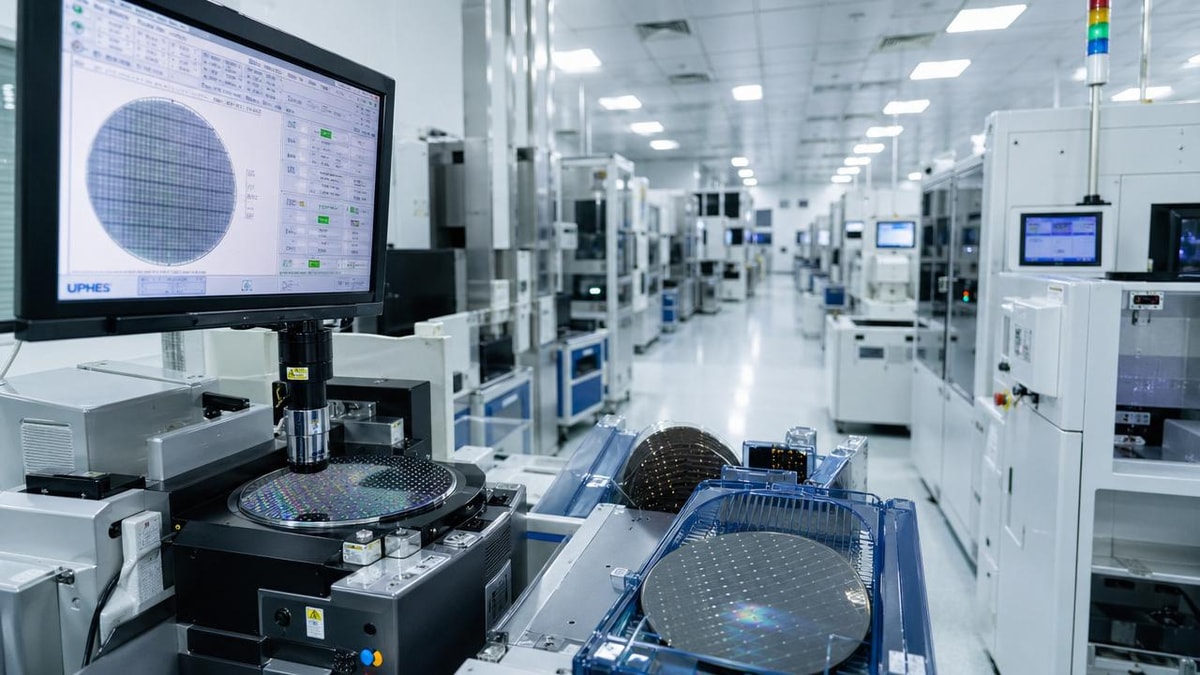
Cleanroom and fab environment control has always mattered, but in 2026 it is becoming central to resilience strategy. The reason is straightforward: contamination, humidity instability, airborne molecular contamination, vibration, and thermal fluctuation can undermine output even when material supply appears secure.
For semiconductor fabrication environments, resilience now includes the ability to maintain process integrity under variable external conditions, energy constraints, maintenance events, and supply interruptions affecting filtration, HVAC subsystems, or monitoring equipment.
Decision-makers are increasingly prioritizing:
- Redundant monitoring systems for particulate, AMC, humidity, pressure, and temperature
- Predictive maintenance for critical environment-control infrastructure
- Energy-resilient thermal management to protect uptime without sacrificing process precision
- Faster root-cause correlation between environment deviation and process/yield anomalies
- Qualified spare-part availability for critical control systems
This trend is especially important for fabs supporting industrial IoT, autonomous systems, and power semiconductor applications, where long-term field reliability matters as much as immediate output. In those sectors, poor environment control may not only affect yield; it may also create latent reliability issues that emerge much later in qualification or customer deployment.
For business evaluators, this means environment control should be assessed as a revenue-protection layer, not merely an operational overhead.
SiC, GaN, and power semiconductor growth are changing resilience priorities
The continued expansion of SiC MOSFET and GaN-related ecosystems is reshaping fab supply chain resilience. These categories support EVs, industrial drives, energy infrastructure, and high-efficiency power conversion—markets where qualification standards are strict and failure costs are high.
Compared with some conventional semiconductor segments, power semiconductor manufacturing often places stronger emphasis on:
- Thermal management performance
- Material quality and defect control
- Long-cycle reliability validation
- Packaging integrity under mechanical and thermal stress
- Stable process conditions over time
As a result, resilience in this market is not just about wafer supply. It also depends on substrate ecosystems, packaging materials, die attach, thermal interface solutions, test coverage, and reliability screening capabilities.
For organizations evaluating suppliers in the power semiconductor chain, 2026 resilience leaders will typically show:
- Clear control over qualification-critical material inputs
- Robust backup planning for packaging and test stages
- Demonstrated consistency across pilot, ramp, and volume production
- Strong technical documentation aligned with automotive or industrial requirements
- Evidence that sourcing choices support reliability, not just output scaling
This is one reason G-SSI’s focus on power semiconductors and third-generation materials is so commercially relevant: resilience in these sectors must be benchmarked technically, not only logistically.
Advanced packaging and IC testing are now core resilience checkpoints
Another major 2026 trend is the shift of supply chain attention toward post-fab stages, especially advanced packaging, assembly, and IC testing. As chiplet architectures, 2.5D/3D integration, and heterogeneous packaging become more important, a fab’s resilience can no longer be judged only by front-end capability.
Packaging and testing have become strategic choke points because they influence:
- Final delivery timing
- Thermal performance
- Interconnect reliability
- Yield realization after wafer fabrication
- Qualification outcomes for end-use markets
For technical and commercial teams, several issues deserve close review:
- Does the partner network include qualified backup routes for advanced packaging?
- Are test programs robust enough to catch subtle failures tied to package stress or sensor drift?
- How vulnerable is the product to delays in substrates, leadframes, bonding materials, or test hardware?
- Can packaging and testing partners support the same documentation rigor as the fab itself?
Companies serving autonomous systems, industrial electronics, and smart sensor applications should pay particular attention here. In these segments, packaging and testing often carry a disproportionate share of reliability risk. A resilient fab strategy must therefore extend all the way to package-level performance validation and supply continuity.
Smart sensors and MEMS supply chains require a different resilience logic
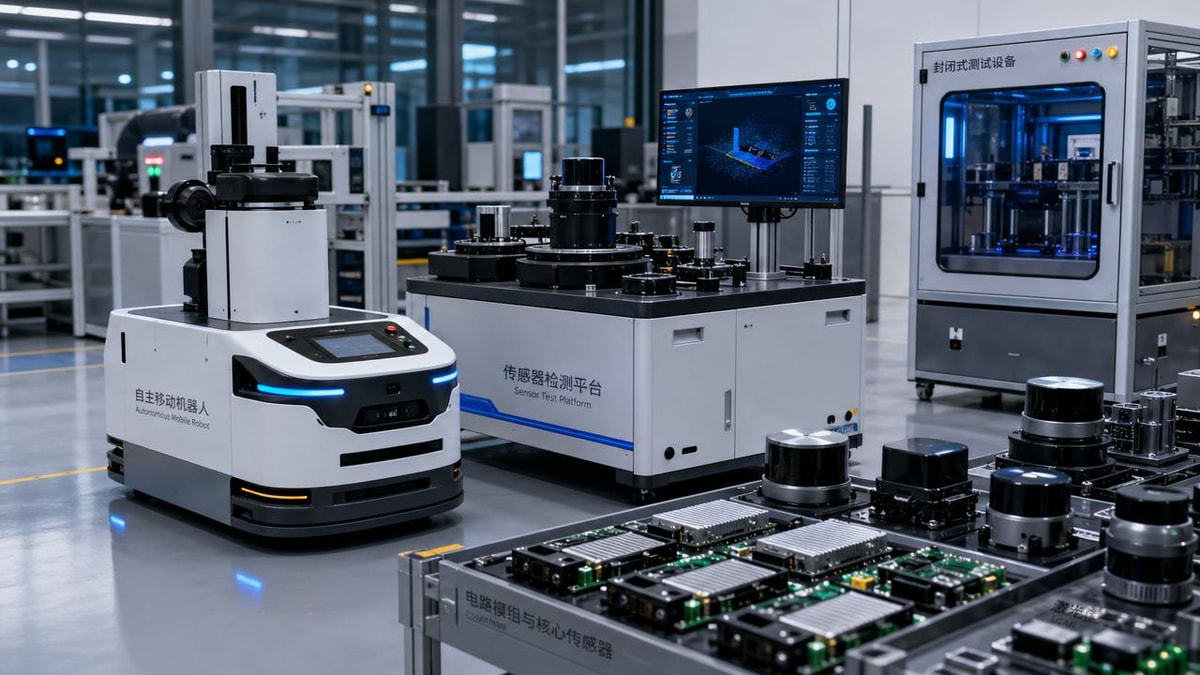
Smart sensors and MEMS sensors present unique resilience challenges because their value depends not only on semiconductor process quality, but also on calibration integrity, package protection, environmental sensitivity, and signal fidelity.
In 2026, resilience planning for sensor-related fabs and sourcing teams increasingly includes:
- Calibration traceability and metrology discipline
- Stable access to specialized materials and packaging components
- Protection against contamination that can affect sensor output accuracy
- Cross-functional control of firmware, hardware, and testing dependencies
- Long-term drift analysis and reliability monitoring
For buyers in industrial IoT and autonomous systems, this is critical. A sensor supply chain can appear healthy from a delivery standpoint while still introducing hidden risk through data inconsistency, calibration variation, or packaging-related field degradation.
That is why leading organizations are evaluating sensor supply resilience through a broader lens: not just can the part be delivered, but can it deliver trustworthy data over time under real operating conditions? This shift aligns closely with G-SSI’s positioning around sensory infrastructure and perception integrity.
Regionalization and “local-for-local” sourcing are accelerating—but with limits
One of the clearest market trends in 2026 is the continued push toward regionalized semiconductor supply chains. Governments, large OEMs, and infrastructure operators increasingly prefer local or regionally secure supply for strategic products. For fabs, this often improves responsiveness and reduces geopolitical exposure.
However, regionalization is not automatically equal to resilience.
Its real value depends on whether local supply can meet the required standards for:
- Process consistency
- Reliability validation
- Purity control
- Documentation and audit readiness
- Scale-up stability
This is especially relevant in the context of China’s expansion in mature-node fabrication. The opportunity is significant, but international buyers still need confidence that rapidly growing capacity aligns with global benchmarks such as SEMI, AEC-Q100, and ISO/IEC 17025-linked quality and testing expectations.
For strategic sourcing teams, the most effective approach is usually not “global only” or “local only,” but a structured hybrid model:
- Local-for-local where performance is proven
- Dual-region backup for critical risk categories
- Qualification protocols that compare suppliers on technical equivalence, not origin alone
- Ongoing benchmarking to detect divergence before it becomes a production issue
In practice, regionalization succeeds when it is paired with disciplined validation and transparent technical benchmarking.
How should fabs measure supply chain resilience in a way that supports decisions?
A common problem in resilience planning is relying on oversimplified metrics. Supplier count alone does not indicate readiness. In 2026, more mature fabs are using decision frameworks that connect resilience to process and business outcomes.
Useful metrics include:
- Qualification depth: number of fully approved alternative sources, not just identified ones
- Time-to-recover: realistic recovery time after disruption at material, equipment, or partner level
- Lot consistency performance: variability trends across chemicals, gases, packaging inputs, or sensor components
- Traceability maturity: ability to link supplier lots to yield, test, and reliability data
- Critical spare coverage: availability and lead time for environment-control and process-support infrastructure
- Change-control discipline: notification, approval, and validation process for material or process changes
- Customer impact exposure: revenue, qualification, or strategic-program dependence on single failure points
Executives should also ask a more commercial question: where does added resilience generate the best return? In many cases, the answer is not in broad inventory expansion, but in targeted actions around the highest-consequence dependencies—particularly chemicals, gases, packaging interfaces, thermal management, and environment monitoring systems.
What resilient supplier evaluation looks like in 2026
For organizations comparing fabs or upstream suppliers, the strongest evaluation models now combine commercial review with technical due diligence. A resilient supplier should be able to demonstrate more than sales capacity or a favorable lead time.
Key evaluation signals include:
- Alignment with recognized standards and auditable quality systems
- Evidence of lot-to-lot consistency and statistical process control
- Transparent failure analysis and corrective action capability
- Qualified secondary capacity or recovery plans
- Infrastructure stability in environment control, thermal management, and testing
- Strong engineering support during qualification and change events
- Clear traceability from raw input to final release
This is where technical benchmarking repositories and institutional references become valuable. For sectors tied to sovereign digital infrastructure, industrial automation, and high-reliability electronics, supplier evaluation increasingly requires objective comparison against recognized performance and compliance frameworks—not marketing claims.
What fab leaders should prioritize now
For most fabs and semiconductor sourcing organizations, 2026 priorities should be practical and sequenced. The most effective next steps are usually:
- Map high-consequence dependencies across chemicals, gases, environmental systems, packaging, testing, and critical sensor-related inputs
- Re-rank suppliers by technical criticality, not just spend or volume
- Close qualification gaps where alternate sources exist but are not production-ready
- Strengthen environment and thermal control resilience because uptime and yield depend on them directly
- Link sourcing data with quality and fab performance data to identify hidden risk early
- Benchmark regional suppliers against international standards before treating local capacity as interchangeable
- Extend resilience planning downstream into packaging, IC testing, and field reliability support
The organizations that move fastest on these priorities are likely to gain more than protection from disruption. They can shorten qualification cycles, improve customer trust, protect margins, and position themselves as reliable partners in strategic semiconductor programs.
Conclusion: resilience will define fab competitiveness more than scale alone
The 2026 market trend is unmistakable: in semiconductor fabrication, resilience is becoming a measurable competitive asset. The fabs and suppliers that lead will not necessarily be those with the largest nominal capacity, but those able to sustain quality, purity, thermal stability, testing integrity, and supply continuity under pressure.
For information researchers, technical evaluators, business assessors, and enterprise decision-makers, the right lens is clear. Focus less on abstract resilience narratives and more on whether a fab ecosystem can consistently support process integrity from high-purity chemicals and environment control to SiC MOSFET production, smart sensors, advanced packaging, and IC testing.
In that environment, technical benchmarking, standards alignment, and multi-layer supply assurance become essential. Resilience in 2026 is no longer a supporting function for fabs—it is a core requirement for trusted participation in autonomous systems, industrial IoT, and sovereign-grade digital infrastructure.
- Power Semiconductors
- SiC MOSFET
- MEMS Sensors
- Smart Sensors
- Electronic Chemicals
- Special Gases
- Semiconductor Fabrication
- Thermal Management
- Data Fidelity
- Industrial IoT
- Autonomous Systems
- Power Conversion
- Supply Chain Resilience
- Third-Generation Materials
- High-Purity Chemicals
- Environment Control
- Sovereign Digital Infrastructure
- IC Testing
- Mature-Node Fabrication
- Digital Infrastructure
- Specialty Gases
Get weekly intelligence in your inbox.
No noise. No sponsored content. Pure intelligence.
 Apr 28, 2026When do rapid prototyping 3D printing services save real costWhen do rapid prototyping 3D printing services save real cost
 Apr 28, 2026What Can Go Wrong in Fan-out Wafer Level Pkg?What Can Go Wrong in Fan-out Wafer Level Pkg?
 Apr 28, 2026What Makes Optical LiDAR Modules Better for Autonomy?What Makes Optical LiDAR Modules Better for Autonomy?
 Apr 28, 20262026 Market Trends in Supply Chain Resilience for Fabs2026 Market Trends in Supply Chain Resilience for Fabs
 Apr 30, 2026SiC MOSFET for Electric Vehicles: How to Balance Efficiency and Thermal RiskSiC MOSFET for Electric Vehicles: How to Balance Efficiency and Thermal Risk
 Apr 30, 2026Intelligent Industrial Era: Technologies Worth Tracking in 2026Intelligent Industrial Era: Technologies Worth Tracking in 2026
 Apr 30, 2026Sensory Data Precision: Why Small Errors Lead to Bigger System FailuresSensory Data Precision: Why Small Errors Lead to Bigger System Failures
 Apr 30, 2026Steel Forging High Strength Components: When Forging Outperforms Other OptionsSteel Forging High Strength Components: When Forging Outperforms Other Options
 Apr 30, 2026Aluminum Extrusions for Construction Industry: Choosing Profiles That Save Time On SiteAluminum Extrusions for Construction Industry: Choosing Profiles That Save Time On Site
 Apr 30, 2026Lathe Turning Precision Machining: How to Reduce Rework on Tight TolerancesLathe Turning Precision Machining: How to Reduce Rework on Tight Tolerances
 Apr 30, 2026Photovoltaic Modules for Residential Use: What A Better Warranty Really MeansPhotovoltaic Modules for Residential Use: What A Better Warranty Really Means
 Apr 30, 2026Solar Panels Wholesale USA: What A Good Supply Partner Should OfferSolar Panels Wholesale USA: What A Good Supply Partner Should Offer
 Apr 30, 2026Lithium Ion Batteries Manufacturer in China: How to Vet Quality and CapacityLithium Ion Batteries Manufacturer in China: How to Vet Quality and Capacity
 Apr 30, 2026EV Charging Stations Quick Installation Guide for Small Commercial SitesEV Charging Stations Quick Installation Guide for Small Commercial Sites
 Apr 30, 2026ESS Energy Storage Lithium Ion Batteries: Safety Checks Before DeploymentESS Energy Storage Lithium Ion Batteries: Safety Checks Before Deployment
 Apr 30, 2026ESS Energy Storage for Renewable Energy: What A Reliable System NeedsESS Energy Storage for Renewable Energy: What A Reliable System Needs
 Apr 30, 2026Hybrid Inverters Cost-Effective Solutions: Where Savings Are RealHybrid Inverters Cost-Effective Solutions: Where Savings Are Real
 Apr 30, 2026Hybrid Inverters for Solar Energy Systems: Which Setup Fits BestHybrid Inverters for Solar Energy Systems: Which Setup Fits Best
 Apr 30, 2026IC Testing Services: How to Compare Turnaround, Yield, and TraceabilityIC Testing Services: How to Compare Turnaround, Yield, and Traceability
 Apr 30, 2026Digital Infrastructure for Smart Cities: Priorities That Shape Long-Term ValueDigital Infrastructure for Smart Cities: Priorities That Shape Long-Term Value
 Apr 30, 2026Digital Infrastructure Standards: What to Verify Before Project ApprovalDigital Infrastructure Standards: What to Verify Before Project Approval
 Apr 30, 2026Semiconductor Standards Explained for New Capacity PlanningSemiconductor Standards Explained for New Capacity Planning
 Apr 30, 2026Best Environment Control Solutions for Cleanrooms with Tight Process DemandsBest Environment Control Solutions for Cleanrooms with Tight Process Demands
 Apr 30, 2026Environment Control in Semiconductor Fabrication: Mistakes That Raise Contamination RiskEnvironment Control in Semiconductor Fabrication: Mistakes That Raise Contamination Risk
 Apr 30, 2026Supply Chain Resilience in Semiconductor Industry: Practical Moves That WorkSupply Chain Resilience in Semiconductor Industry: Practical Moves That Work
 Apr 30, 2026Autonomous Systems for Industrial Automation: Start with These Use CasesAutonomous Systems for Industrial Automation: Start with These Use Cases
 Apr 30, 2026Autonomous Systems OEM Selection: Common Risks and Red FlagsAutonomous Systems OEM Selection: Common Risks and Red Flags