

What Makes Optical LiDAR Modules Better for Autonomy?
Optical LiDAR modules are becoming a preferred sensing layer for autonomy because they deliver a combination that cameras and many radar systems alone cannot: precise 3D spatial measurement, strong performance in dynamic scenes, and higher confidence for safety-critical decisions. For technical evaluators and business decision-makers, the real question is not whether LiDAR is “advanced,” but whether a specific optical LiDAR architecture improves perception reliability, system integration, lifecycle cost, and operational resilience in the intended environment.
In practical terms, optical LiDAR modules are better for autonomy when they help autonomous platforms detect objects earlier, classify space more accurately, operate more safely in edge cases, and integrate more predictably into industrial and mobility-grade digital infrastructure. Their value is highest where precision, redundancy, environmental robustness, and data fidelity matter more than lowest possible sensor cost.
Why are optical LiDAR modules increasingly favored in autonomous systems?
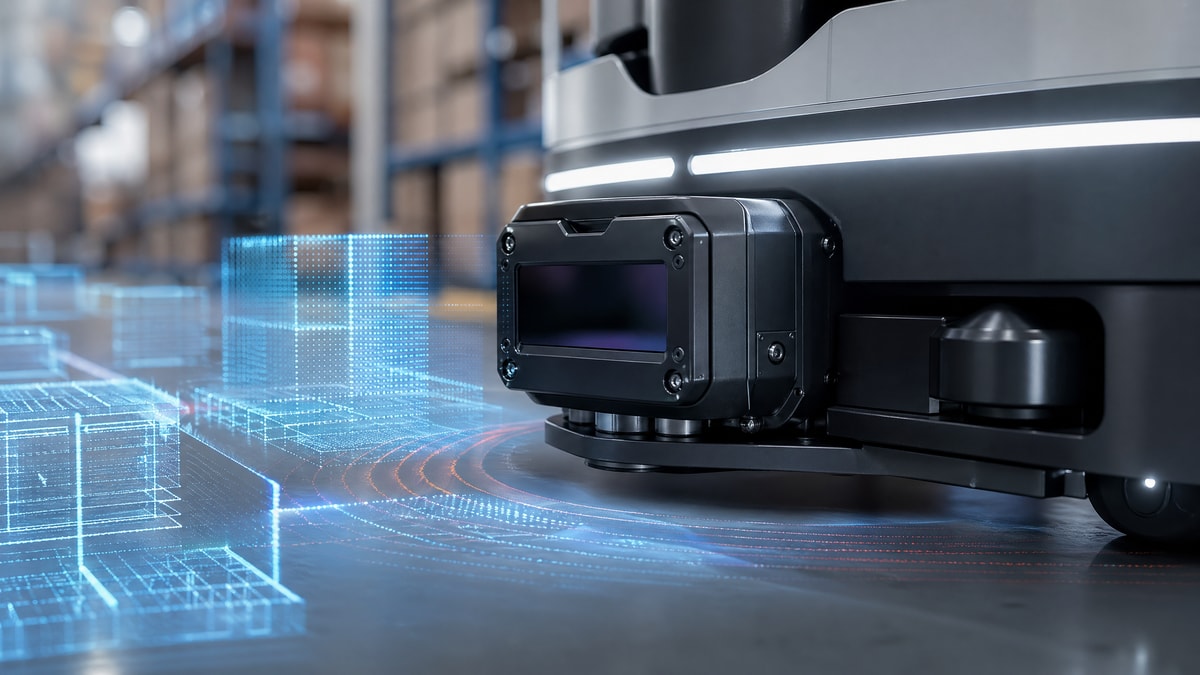
The short answer is that autonomy depends on trustworthy perception, and optical LiDAR provides direct distance measurement with high spatial accuracy. Unlike passive vision systems that infer depth from images, LiDAR actively emits light and measures the return signal. This gives autonomous systems a dense 3D representation of surroundings, which is especially useful for navigation, obstacle detection, free-space mapping, localization, and safe path planning.
For engineers and evaluators, the advantage is not just “more data.” It is better structured data. Optical LiDAR modules can provide:
- Accurate range measurement at long and short distances
- High-resolution point clouds for object contour detection
- Reliable geometric perception in complex scenes
- Improved detection of low-texture or visually ambiguous objects
- Stronger sensor fusion inputs for cameras, radar, MEMS sensors, and Industrial IoT systems
This matters because autonomous systems fail not only when they miss obvious objects, but when perception confidence drops in unusual conditions. Optical LiDAR reduces uncertainty in many of those moments.
What makes an optical LiDAR module “better” than alternatives?
Not all LiDAR modules create equal value. A better optical LiDAR module for autonomy is one that improves decision quality at the system level, not just one with a strong headline specification. Buyers and technical teams should focus on several performance dimensions.
1. Higher data fidelity
For autonomy, raw sensing accuracy is only part of the story. Data fidelity includes consistency, signal integrity, timing precision, and the ability to maintain usable output in cluttered or reflective environments. A module with stable point cloud quality under varying ambient light, surface reflectivity, and motion conditions is far more useful than one that performs well only in lab settings.
2. Better perception in edge cases
Autonomous systems are judged by what happens in difficult conditions: low-light environments, partial occlusion, crowded industrial spaces, roadside clutter, warehouse intersections, mixed object materials, or fast relative motion. Better optical LiDAR modules handle these cases with less dropout, fewer ghost points, and stronger object separation.
3. Lower false positives and false negatives
False positives can trigger unnecessary braking or process interruptions. False negatives create safety risk. A better module balances sensitivity and robustness so that perception software receives cleaner, more actionable sensory data.
4. More reliable integration into the autonomy stack
A good module is not isolated hardware. It must fit the compute pipeline, time synchronization model, thermal budget, enclosure design, network architecture, and safety strategy. If a LiDAR module adds integration complexity, unstable data interfaces, or maintenance burden, its theoretical sensing advantage may not translate into operational benefit.
How do optical LiDAR modules improve autonomous decision-making?
Autonomous systems do not act on images or point clouds directly. They act on interpreted environmental models. Optical LiDAR improves those models by delivering more precise spatial evidence for perception and control algorithms.
This directly supports:
- Object detection: Better distance and shape awareness for vehicles, people, equipment, pallets, infrastructure, or static obstacles
- Localization: Stronger simultaneous localization and mapping (SLAM) and map alignment performance
- Trajectory planning: More stable path generation in constrained or changing environments
- Collision avoidance: Earlier and more confident hazard recognition
- Functional safety: More dependable perception redundancy when paired with cameras and radar
For enterprise buyers, this means LiDAR can improve not only autonomy capability, but also operational uptime, safety metrics, and compliance readiness in industrial deployments.
Where do optical LiDAR modules outperform camera-only or radar-heavy approaches?
Optical LiDAR is especially valuable in scenarios where direct 3D measurement is mission-critical. Camera-only systems can be cost-effective, but they depend heavily on lighting, image quality, training data, and inference quality. Radar offers strong velocity sensing and all-weather capability, but often lacks the spatial granularity needed for precise scene interpretation.
Optical LiDAR tends to outperform or complement these approaches in:
- Precise obstacle contouring: Useful in robotics, logistics, mining, industrial vehicles, and smart infrastructure
- Structured and semi-structured navigation: Warehouses, factories, ports, campuses, and autonomous delivery routes
- Fine free-space detection: Where path clearance matters more than basic presence detection
- Complex urban or industrial edge cases: Dense geometry, overlapping objects, mixed materials, and narrow margins
The best approach in most real-world autonomy stacks is not LiDAR alone, but sensor fusion. Optical LiDAR modules become “better” when they elevate the quality of fusion across cameras, radar, MEMS inertial sensing, and control systems.
What technical criteria should evaluation teams use when comparing LiDAR modules?
For technical assessment personnel, broad claims like “high resolution” or “automotive-grade” are not enough. Evaluation should be tied to deployment reality, system safety goals, and lifecycle expectations.
Core technical criteria
- Detection range: Effective range for target object classes, not just maximum advertised range
- Angular resolution: Determines object separation and scene detail
- Frame rate and latency: Critical for dynamic autonomy decisions
- Field of view: Horizontal and vertical coverage for the intended operational design domain
- Signal-to-noise performance: Stability under ambient light and reflective interference
- Point cloud consistency: Important for machine perception and tracking models
- Environmental robustness: Dust, vibration, humidity, shock, and temperature tolerance
- Thermal management requirements: Sustained performance under real enclosure and duty-cycle conditions
- Interface compatibility: Ethernet, synchronization protocols, software stack integration, edge compute fit
Architecture-level considerations
Evaluation should also consider whether the module uses scanning, solid-state, MEMS-based, flash, or hybrid optical approaches. Each architecture involves tradeoffs in durability, field of view, power consumption, cost, and manufacturing scalability.
For industrial and infrastructure deployments, the best architecture is the one that balances reliability, maintainability, and data performance in the target application—not necessarily the one with the most aggressive marketing claims.
How important are reliability, thermal management, and safety in LiDAR selection?
They are central. In autonomy, a sensor that performs well briefly but degrades under temperature stress, vibration, contamination, or long duty cycles can create both safety and financial risk.
This is particularly relevant for the G-SSI audience, where semiconductor integrity, sensor reliability, and sovereign-grade infrastructure quality are strategic concerns. Optical LiDAR modules should be assessed not just as perception devices, but as mission-critical components within a larger sensory-infrastructure stack.
Thermal management
Thermal behavior affects optical stability, ranging accuracy, electronics reliability, and long-term drift. Teams should ask:
- How does performance change across the full operating temperature range?
- What cooling or enclosure constraints exist?
- Is there thermal throttling under continuous operation?
- How does heat affect laser emission stability and receiver sensitivity?
Reliability and quality assurance
Buyers should look for evidence of validation against relevant quality frameworks, environmental tests, calibration controls, and manufacturing repeatability. Depending on the use case, standards alignment such as ISO-based quality systems, reliability screening, and traceable test processes can materially reduce deployment risk.
Safety and redundancy
LiDAR should be evaluated as part of a safety architecture. Key questions include whether the module supports fail-detection, health monitoring, calibration integrity, and safe degradation behavior. In high-consequence environments, redundant sensing paths are often necessary.
What business value do better optical LiDAR modules create?
For commercial evaluators and enterprise decision-makers, technical superiority matters only if it leads to measurable business value. Better optical LiDAR modules can support that value in several ways.
- Reduced incident risk: Better perception can lower collision probability and safety events
- Higher operational uptime: Reliable sensing reduces interruptions and false stops
- Improved automation coverage: More environments become suitable for autonomous operation
- Lower validation burden over time: Cleaner, more stable data can simplify tuning and system refinement
- Stronger lifecycle economics: Better reliability may reduce replacement, recalibration, and field service costs
- Improved compliance posture: Stronger perception evidence supports safety cases and quality governance
In sectors such as industrial mobility, smart logistics, infrastructure monitoring, robotics, and advanced transport, these benefits often justify a higher upfront sensor cost if deployment scale and safety requirements are substantial.
What concerns should buyers and integrators watch for?
Even strong optical LiDAR modules can disappoint if common risks are ignored. The main concerns include:
- Specification inflation: Marketing range figures may not reflect real target reflectivity or environmental conditions
- Integration burden: Data formats, synchronization, calibration, and compute demands can increase project complexity
- Environmental mismatch: A module designed for one use case may underperform in dust, rain, glare, vibration, or heat
- Supply chain risk: Limited sourcing, immature production scaling, or weak component traceability can undermine rollout plans
- Total cost underestimation: Engineering, software adaptation, enclosure redesign, and maintenance often exceed initial hardware assumptions
For this reason, procurement and engineering teams should assess LiDAR through a full deployment lens: technical fit, validation effort, serviceability, vendor maturity, and long-term availability.
How should organizations decide whether optical LiDAR is the right choice?
A useful decision framework is to ask four practical questions:
1. Does the autonomy application require precise 3D geometry?
If safe operation depends on exact object position, contour, and free-space understanding, optical LiDAR is often highly valuable.
2. Are edge-case failures expensive or dangerous?
The higher the safety, downtime, or liability cost of perception errors, the stronger the case for LiDAR-based redundancy and data fidelity.
3. Can the system support integration and thermal requirements?
The module must fit power, compute, enclosure, and maintenance realities.
4. Is the vendor and supply chain mature enough for scale?
Autonomy programs need dependable sourcing, validated manufacturing, and support continuity.
If the answer to these questions is yes, optical LiDAR modules are often not just better, but strategically necessary.
Final assessment: what really makes optical LiDAR modules better for autonomy?
Optical LiDAR modules are better for autonomy when they improve confidence, not just capability. Their real advantage lies in delivering precise, high-fidelity sensory data that helps autonomous systems understand space more accurately, respond more safely, and operate more reliably across complex real-world conditions.
For technical assessment teams, the best modules are those that combine range, resolution, stability, environmental robustness, and integration readiness. For business and executive stakeholders, the best modules are those that reduce operational risk, support scalable deployment, and strengthen the resilience of the broader digital infrastructure.
In other words, the value of optical LiDAR is not simply that it sees more. It is that it helps autonomous systems know more, trust more, and decide better.
Get weekly intelligence in your inbox.
No noise. No sponsored content. Pure intelligence.
 Apr 28, 2026When do rapid prototyping 3D printing services save real costWhen do rapid prototyping 3D printing services save real cost
 Apr 28, 2026What Can Go Wrong in Fan-out Wafer Level Pkg?What Can Go Wrong in Fan-out Wafer Level Pkg?
 Apr 28, 2026What Makes Optical LiDAR Modules Better for Autonomy?What Makes Optical LiDAR Modules Better for Autonomy?
 Apr 28, 20262026 Market Trends in Supply Chain Resilience for Fabs2026 Market Trends in Supply Chain Resilience for Fabs
 Apr 30, 2026SiC MOSFET for Electric Vehicles: How to Balance Efficiency and Thermal RiskSiC MOSFET for Electric Vehicles: How to Balance Efficiency and Thermal Risk
 Apr 30, 2026Intelligent Industrial Era: Technologies Worth Tracking in 2026Intelligent Industrial Era: Technologies Worth Tracking in 2026
 Apr 30, 2026Sensory Data Precision: Why Small Errors Lead to Bigger System FailuresSensory Data Precision: Why Small Errors Lead to Bigger System Failures
 Apr 30, 2026Steel Forging High Strength Components: When Forging Outperforms Other OptionsSteel Forging High Strength Components: When Forging Outperforms Other Options
 Apr 30, 2026Aluminum Extrusions for Construction Industry: Choosing Profiles That Save Time On SiteAluminum Extrusions for Construction Industry: Choosing Profiles That Save Time On Site
 Apr 30, 2026Lathe Turning Precision Machining: How to Reduce Rework on Tight TolerancesLathe Turning Precision Machining: How to Reduce Rework on Tight Tolerances
 Apr 30, 2026Photovoltaic Modules for Residential Use: What A Better Warranty Really MeansPhotovoltaic Modules for Residential Use: What A Better Warranty Really Means
 Apr 30, 2026Solar Panels Wholesale USA: What A Good Supply Partner Should OfferSolar Panels Wholesale USA: What A Good Supply Partner Should Offer
 Apr 30, 2026Lithium Ion Batteries Manufacturer in China: How to Vet Quality and CapacityLithium Ion Batteries Manufacturer in China: How to Vet Quality and Capacity
 Apr 30, 2026EV Charging Stations Quick Installation Guide for Small Commercial SitesEV Charging Stations Quick Installation Guide for Small Commercial Sites
 Apr 30, 2026ESS Energy Storage Lithium Ion Batteries: Safety Checks Before DeploymentESS Energy Storage Lithium Ion Batteries: Safety Checks Before Deployment
 Apr 30, 2026ESS Energy Storage for Renewable Energy: What A Reliable System NeedsESS Energy Storage for Renewable Energy: What A Reliable System Needs
 Apr 30, 2026Hybrid Inverters Cost-Effective Solutions: Where Savings Are RealHybrid Inverters Cost-Effective Solutions: Where Savings Are Real
 Apr 30, 2026Hybrid Inverters for Solar Energy Systems: Which Setup Fits BestHybrid Inverters for Solar Energy Systems: Which Setup Fits Best
 Apr 30, 2026IC Testing Services: How to Compare Turnaround, Yield, and TraceabilityIC Testing Services: How to Compare Turnaround, Yield, and Traceability
 Apr 30, 2026Digital Infrastructure for Smart Cities: Priorities That Shape Long-Term ValueDigital Infrastructure for Smart Cities: Priorities That Shape Long-Term Value
 Apr 30, 2026Digital Infrastructure Standards: What to Verify Before Project ApprovalDigital Infrastructure Standards: What to Verify Before Project Approval
 Apr 30, 2026Semiconductor Standards Explained for New Capacity PlanningSemiconductor Standards Explained for New Capacity Planning
 Apr 30, 2026Best Environment Control Solutions for Cleanrooms with Tight Process DemandsBest Environment Control Solutions for Cleanrooms with Tight Process Demands
 Apr 30, 2026Environment Control in Semiconductor Fabrication: Mistakes That Raise Contamination RiskEnvironment Control in Semiconductor Fabrication: Mistakes That Raise Contamination Risk
 Apr 30, 2026Supply Chain Resilience in Semiconductor Industry: Practical Moves That WorkSupply Chain Resilience in Semiconductor Industry: Practical Moves That Work
 Apr 30, 2026Autonomous Systems for Industrial Automation: Start with These Use CasesAutonomous Systems for Industrial Automation: Start with These Use Cases
 Apr 30, 2026Autonomous Systems OEM Selection: Common Risks and Red FlagsAutonomous Systems OEM Selection: Common Risks and Red Flags