

When do rapid prototyping 3D printing services save real cost
When do rapid prototyping 3D printing services actually reduce cost rather than add another line item to development spend? In most industrial and electronics programs, the savings are real when teams need to shorten design iterations, avoid premature tooling, validate fit and thermal concepts early, or reduce supply-chain delay for low-volume functional parts. The savings are much less convincing when production volumes are high, tolerances require conventional finishing anyway, or the printed part is used without a clear validation purpose. For buyers, engineers, and project leaders evaluating Thermal Management, GaN power device packaging, 2.5D integration, sensor housings, or Industrial IoT hardware, the business case comes down to one question: does 3D printing remove a more expensive bottleneck elsewhere in the product cycle?
This article explains where rapid prototyping 3D printing services save real cost, how to evaluate total cost beyond piece price, and what decision-makers should check before approving additive manufacturing for technical development or pre-production work.
Where rapid prototyping 3D printing services save the most money
The biggest mistake in cost evaluation is comparing a printed prototype only to the unit price of a machined or molded part. In reality, the strongest savings often come from avoiding delays, redesign loops, tooling scrap, and engineering uncertainty.
Rapid prototyping 3D printing services typically create measurable cost savings in these situations:
- Early-stage design iteration: When engineers expect several geometry changes, 3D printing avoids repeated CNC programming, fixture changes, or soft tooling updates.
- Tooling risk reduction: Before investing in molds or production tooling, a printed prototype can confirm fit, assembly sequence, airflow, cable routing, or enclosure access.
- Low-volume functional validation: For pilot builds, engineering samples, and customer demos, additive manufacturing often costs less than setting up conventional production.
- Complex geometry: Parts with internal channels, lattice structures, lightweight support features, or custom thermal paths may be cheaper to prototype with 3D printing than with subtractive methods.
- Compressed development schedules: If a delayed prototype pushes out qualification, customer approval, or field testing, schedule compression alone can justify the printing cost.
- Supply-chain disruption: When imported prototype parts face long lead times, local or regional 3D printing services can reduce both procurement delay and project risk.
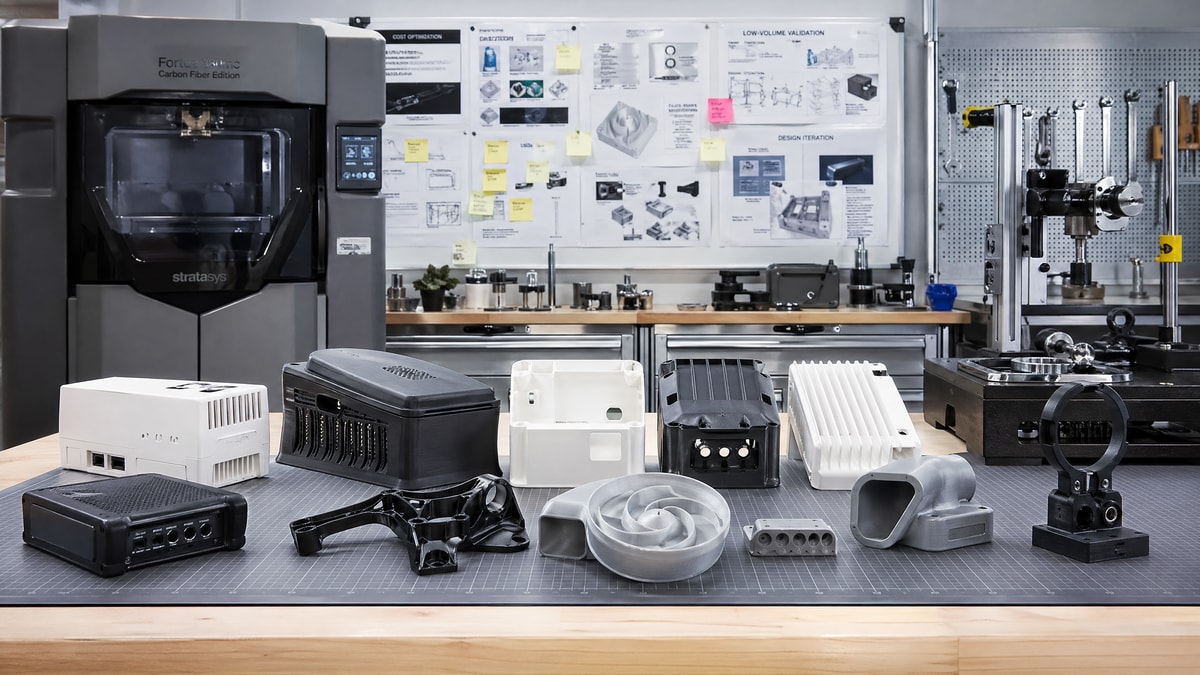
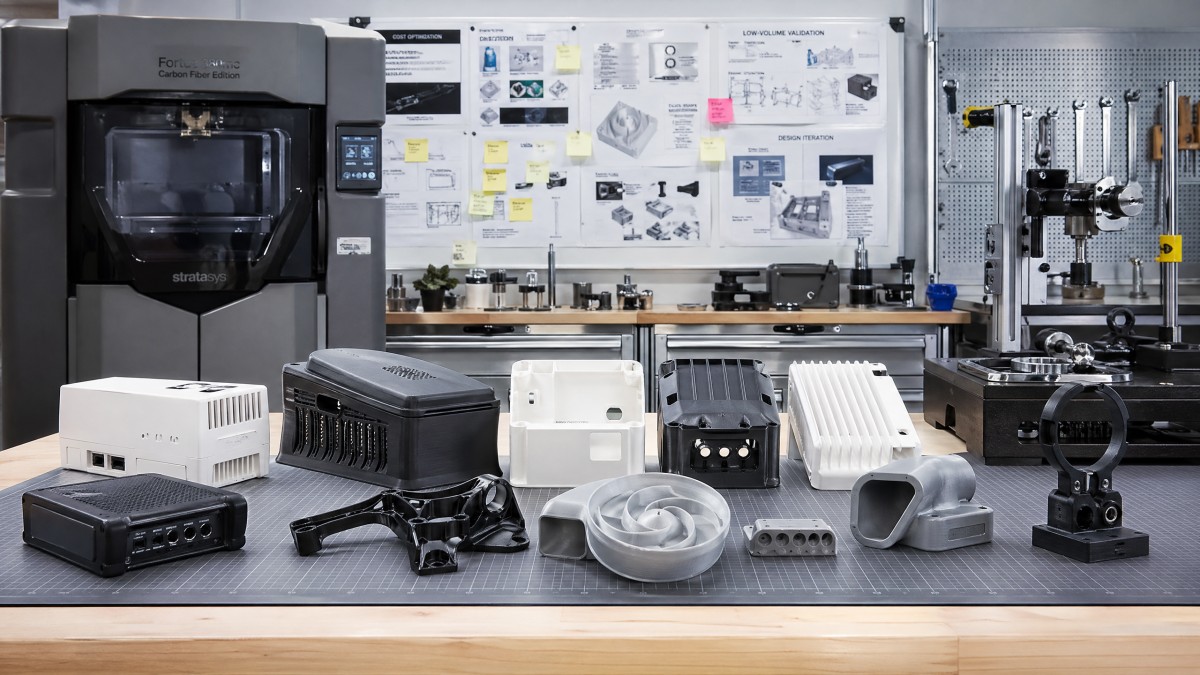
For semiconductor-adjacent and industrial electronics applications, these savings are especially relevant in custom test fixtures, sensor brackets, airflow guides, connector positioning aids, thermal interface evaluation parts, and pre-tooling package or enclosure mockups.
How to tell whether the cost savings are real or only look good on paper
To make a sound decision, buyers and technical evaluators should look beyond the quoted print price and calculate the cost of the full development decision. A cheap prototype that does not answer the engineering question can be more expensive than a higher-cost part that prevents a tooling mistake or qualification failure.
A practical evaluation framework includes five cost layers:
- Direct prototype cost
Printing, material, post-processing, shipping, and any finishing or inspection. - Iteration cost
How much does each design revision cost in time and money? Additive manufacturing usually wins when multiple revisions are likely. - Tooling avoidance
If a printed part helps delay or avoid mold investment until the design is validated, the savings can be substantial. - Schedule impact
What is the cost of losing 2 to 6 weeks in NPI, customer sampling, or internal validation? - Failure prevention
If the prototype helps identify assembly interference, thermal concentration, sealing gaps, or ergonomic errors before production, it may prevent much larger downstream losses.
In many B2B environments, rapid prototyping 3D printing services save real cost not because each part is cheaper, but because they reduce the cost of uncertainty. That distinction matters to procurement teams and project sponsors.
Best-fit use cases in electronics, power conversion, and industrial systems
For readers in advanced electronics and infrastructure markets, additive manufacturing is most valuable when it supports faster validation around physical integration, reliability assumptions, and deployment practicality.
High-value use cases include:
- Thermal management evaluation: Prototype ducts, fan shrouds, heatsink positioning frames, and air-guiding features to test thermal behavior before final tooling.
- GaN and SiC power module development: Validate enclosure spacing, insulation clearances, connector access, and packaging concepts for high-efficiency power conversion systems.
- 2.5D/3D packaging support tooling: Create handling trays, alignment tools, lab fixtures, and non-production validation aids for packaging and test workflows.
- Industrial IoT device housings: Confirm sensor placement, ingress-protection concepts, mounting logic, and field-service accessibility.
- MEMS and sensor integration: Prototype brackets, calibration fixtures, or vibration-isolation structures for test environments.
- Factory and lab fixtures: Produce quick-turn jigs, gauge holders, routing aids, and maintenance supports without waiting for conventional fabrication.
These applications are attractive because they often combine moderate performance needs with high iteration value. In other words, the prototype does not have to be a final production part to deliver strong commercial benefit.
When 3D printing does not save cost
Rapid prototyping 3D printing services are not automatically economical. They can become expensive when used for the wrong purpose or without clear validation criteria.
Cost savings are often weak or negative in these cases:
- High-volume production intent: If the design is already frozen and volumes are large, molding, stamping, machining, or casting may offer a lower total unit cost.
- Over-specified prototype requirements: Printing a highly finished, near-production cosmetic part when a simple fit-check model would answer the question wastes budget.
- Material mismatch: If the printed material does not represent thermal, mechanical, or chemical behavior well enough, the prototype may create false confidence.
- Tight tolerance dependence: If extensive secondary machining or finishing is required, the speed and cost advantage may disappear.
- No defined decision point: If the team cannot say what the prototype is meant to validate, it may become an expensive visual model rather than a useful engineering tool.
For enterprise buyers, this is where supplier qualification matters. A credible rapid prototyping partner should ask what the part needs to prove, not just what geometry to print.
How procurement and engineering teams should evaluate a 3D printing service provider
The quality of the supplier has a direct effect on cost outcome. A low quote from a provider with weak process control can lead to rework, delayed reviews, and invalid test conclusions.
Evaluation criteria should include:
- Process fit: Can the supplier recommend the right process, such as SLA, SLS, MJF, FDM, DMLS, or another method based on your validation goal?
- Material guidance: Do they understand thermal, dielectric, mechanical, and environmental requirements relevant to industrial electronics?
- Dimensional consistency: Can they provide inspection support or tolerance capability that matches the application?
- Post-processing options: Are machining, finishing, inserts, coatings, or sealing available if the use case requires them?
- Lead time reliability: Fast quoting is useful, but on-time delivery is what protects project economics.
- Confidentiality and IP control: Essential for semiconductor tooling concepts, packaging aids, and sensitive infrastructure products.
- Application understanding: The best providers understand why the part exists, not just how to print it.
For organizations operating to strict quality or compliance expectations, it is also helpful to verify whether the supplier can support documentation, traceability, and inspection discipline aligned with internal quality systems.
A simple business case model for decision-makers
If you need a quick internal justification, use this simplified formula:
Real savings = avoided tooling cost + avoided redesign cost + schedule value + avoided failure cost - total prototype cost
For example, if a printed prototype costs more than a basic machined sample but helps the team:
- avoid one tooling revision,
- shorten validation by two weeks,
- identify a thermal or assembly issue before pilot build,
- and keep a customer milestone on schedule,
then the economic value can be significant even when the prototype itself is not the cheapest fabrication option.
This is particularly true in sectors where product delays affect qualification windows, distributor commitments, capital planning, or strategic customer programs. In such environments, rapid prototyping 3D printing services should be judged as a risk-reduction tool as much as a fabrication method.
What smart teams do before placing the order
To capture real value, teams should define the job of the prototype before requesting quotes. A short internal checklist helps:
- What decision must this prototype enable?
- Is the goal fit, thermal behavior, assembly validation, airflow, handling, or customer presentation?
- How many design revisions are likely?
- What level of tolerance and finish is actually necessary?
- Does the material need to simulate production behavior, or only geometry?
- What downstream cost are we trying to avoid?
This approach prevents overbuying and helps align engineering, sourcing, QA, and project management around measurable outcomes.
Conclusion: rapid prototyping 3D printing services save real cost when they remove larger risks
Rapid prototyping 3D printing services save real cost when they accelerate learning, reduce tooling exposure, support low-volume validation, and protect development schedules. They are most valuable when the printed part answers a costly engineering or business question early. They are least valuable when used as a default manufacturing method without a clear validation purpose.
For organizations working in power electronics, semiconductor support systems, sensor infrastructure, and Industrial IoT hardware, the right additive manufacturing strategy can improve decision speed, strengthen supply-chain resilience, and reduce expensive late-stage change. The best way to judge value is not to ask whether 3D printing is cheaper per part, but whether it prevents a more expensive mistake, delay, or commitment.
Get weekly intelligence in your inbox.
No noise. No sponsored content. Pure intelligence.
 Apr 28, 2026When do rapid prototyping 3D printing services save real costWhen do rapid prototyping 3D printing services save real cost
 Apr 28, 2026What Can Go Wrong in Fan-out Wafer Level Pkg?What Can Go Wrong in Fan-out Wafer Level Pkg?
 Apr 28, 2026What Makes Optical LiDAR Modules Better for Autonomy?What Makes Optical LiDAR Modules Better for Autonomy?
 Apr 28, 20262026 Market Trends in Supply Chain Resilience for Fabs2026 Market Trends in Supply Chain Resilience for Fabs
 Apr 30, 2026SiC MOSFET for Electric Vehicles: How to Balance Efficiency and Thermal RiskSiC MOSFET for Electric Vehicles: How to Balance Efficiency and Thermal Risk
 Apr 30, 2026Intelligent Industrial Era: Technologies Worth Tracking in 2026Intelligent Industrial Era: Technologies Worth Tracking in 2026
 Apr 30, 2026Sensory Data Precision: Why Small Errors Lead to Bigger System FailuresSensory Data Precision: Why Small Errors Lead to Bigger System Failures
 Apr 30, 2026Steel Forging High Strength Components: When Forging Outperforms Other OptionsSteel Forging High Strength Components: When Forging Outperforms Other Options
 Apr 30, 2026Aluminum Extrusions for Construction Industry: Choosing Profiles That Save Time On SiteAluminum Extrusions for Construction Industry: Choosing Profiles That Save Time On Site
 Apr 30, 2026Lathe Turning Precision Machining: How to Reduce Rework on Tight TolerancesLathe Turning Precision Machining: How to Reduce Rework on Tight Tolerances
 Apr 30, 2026Photovoltaic Modules for Residential Use: What A Better Warranty Really MeansPhotovoltaic Modules for Residential Use: What A Better Warranty Really Means
 Apr 30, 2026Solar Panels Wholesale USA: What A Good Supply Partner Should OfferSolar Panels Wholesale USA: What A Good Supply Partner Should Offer
 Apr 30, 2026Lithium Ion Batteries Manufacturer in China: How to Vet Quality and CapacityLithium Ion Batteries Manufacturer in China: How to Vet Quality and Capacity
 Apr 30, 2026EV Charging Stations Quick Installation Guide for Small Commercial SitesEV Charging Stations Quick Installation Guide for Small Commercial Sites
 Apr 30, 2026ESS Energy Storage Lithium Ion Batteries: Safety Checks Before DeploymentESS Energy Storage Lithium Ion Batteries: Safety Checks Before Deployment
 Apr 30, 2026ESS Energy Storage for Renewable Energy: What A Reliable System NeedsESS Energy Storage for Renewable Energy: What A Reliable System Needs
 Apr 30, 2026Hybrid Inverters Cost-Effective Solutions: Where Savings Are RealHybrid Inverters Cost-Effective Solutions: Where Savings Are Real
 Apr 30, 2026Hybrid Inverters for Solar Energy Systems: Which Setup Fits BestHybrid Inverters for Solar Energy Systems: Which Setup Fits Best
 Apr 30, 2026IC Testing Services: How to Compare Turnaround, Yield, and TraceabilityIC Testing Services: How to Compare Turnaround, Yield, and Traceability
 Apr 30, 2026Digital Infrastructure for Smart Cities: Priorities That Shape Long-Term ValueDigital Infrastructure for Smart Cities: Priorities That Shape Long-Term Value
 Apr 30, 2026Digital Infrastructure Standards: What to Verify Before Project ApprovalDigital Infrastructure Standards: What to Verify Before Project Approval
 Apr 30, 2026Semiconductor Standards Explained for New Capacity PlanningSemiconductor Standards Explained for New Capacity Planning
 Apr 30, 2026Best Environment Control Solutions for Cleanrooms with Tight Process DemandsBest Environment Control Solutions for Cleanrooms with Tight Process Demands
 Apr 30, 2026Environment Control in Semiconductor Fabrication: Mistakes That Raise Contamination RiskEnvironment Control in Semiconductor Fabrication: Mistakes That Raise Contamination Risk
 Apr 30, 2026Supply Chain Resilience in Semiconductor Industry: Practical Moves That WorkSupply Chain Resilience in Semiconductor Industry: Practical Moves That Work
 Apr 30, 2026Autonomous Systems for Industrial Automation: Start with These Use CasesAutonomous Systems for Industrial Automation: Start with These Use Cases
 Apr 30, 2026Autonomous Systems OEM Selection: Common Risks and Red FlagsAutonomous Systems OEM Selection: Common Risks and Red Flags